

Self-publishing tips: how Blurb creators turn ideas into books that sell
Editor’s note: Updated for November 2025, this article merges advice from Blurb bestsellers in the past three years with new insights for today’s self-publishing landscape.
***
More than 2.6 million self-published titles hit the market in 2023, compared to just 563,019 from traditional publishers—a gap that continues to widen each year. This exponential growth reflects a major shift: Creators who once waited for approval are now building on their own terms. They’re publishing faster, earning more control over their rights and revenue, and using books to amplify their creative work and professional credibility.
At Blurb, we’ve seen that shift firsthand. Our bestselling creators—photographers, artists, businesses, and entrepreneurs—are proof that self-publishing isn’t a fallback, it’s a foundation. They’ve turned passion projects into lasting portfolios, small runs into sustainable businesses, and ideas into books that travel further than a social post ever could.
In the sections ahead, these bestselling creators will teach you how to approach every stage of the process—from defining your vision and building your book, to launching, promoting, and evolving it over time. Whether you’re publishing your first title or refining your next, these self-publishing tips offer a roadmap for creating something that lasts.
Why self-publish?
Before we get into the tips from self-published authors, it’s worth asking the biggest question first: Why even go through the self-publishing process?
The number-one reason is freedom and control. When you self-publish, you decide when and how your book is released, choose your own pricing, and retain the rights (and profits) to your work. That creative and financial independence means you have a greater say in how your work is made and how it shows up in the world.
“Self-publishing allowed me to compose the book of my dreams!” exclaims Dyèvre Xavier, a traditionally published cabinetmaker and restorer of antique furniture who holds the prestigious Meilleur Ouvrier de France in marquetry. After three books, he became unsatisfied with his publisher and decided to self-publish his fourth, Wooden pictures marquetries, to retain complete creative control.
Aside from owning every creative decision, self-publishing brings other advantages. You don’t have to wait for approval from a publisher or go to market on their (often long) timeline. You keep a higher share of profits. And you decide when and how to market your work instead of hoping someone else will invest the time and budget to do it for you.
16 self-publishing tips from Blurb creators
Click each tip to jump to insights and examples from real self-published authors below.
Before you begin
Before you ever open your design tool or start laying out pages, take time to understand what you’re making and why. The most successful self-publishers start with a clear purpose and plan. They know what their book needs to say, who it’s for, and how it fits into their bigger creative or business goals. Here’s how you can do that, too.
Start with what you love
It’s easy to get caught up in book trends and try to make something you think will sell. But the subjects you love most are the ones that last. They’re what you’ll actually wake up wanting to work on.
Photographer Michael Seif took that advice to heart. His book 60s New York City began as years of street photography that he simply couldn’t stop taking. “Eventually, those photographs become a time capsule,” he says. “[I’m an] 80-year-old now; my daughter, grandchildren, and old friends love to look back at life in the 1960s.”
Cookbook author Gary Blake followed his own passion into a successful debut—and a second book soon after. After spending decades collecting and perfecting recipes, he used the pandemic as his cue to finally share them with the world. The result was Gary Blake’s Extraordinary Ordinary Cooking, a collection that celebrates everyday food with warmth and accessibility.
Blake’s top self-publishing tip? “Focus on your passion. Choose the one thing you love most and share it with others.”
Whatever your subject, start from the place that keeps you curious and build in a way that helps others connect with it. Passion gives your book its staying power, and when you make that enthusiasm easy to join in on, it becomes contagious.
Define your audience and their need
Once you know your “why,” clarify your “who.” The best self-published books have focus. They serve a specific reader or community and deliver something that’s missing in the market.
Artist and educator Jane Blundell found her niche by listening to what her audience wanted most. Based in Sydney, she had already spent over a decade creating a website, blog, and online courses teaching watercolor. Her fans kept asking for a printed version of her reference charts, so she created Watercolour Mixing Charts.
“These books have been commercially successful because they fill a need,” Blundell says. “People want a quick way to understand watercolour mixing, and these books give them that information in a clear and concise way.”
Wedding planner and model Kassidy Pitts took a similar approach, creating the resource she couldn’t find while planning her own wedding on a four-month timeline. Her advice for aspiring creators is simple: “Involve your community, and don’t let the fear of taking action keep you from moving forward with something you believe in.”
For illustrator Ego Rodriguez, audience connection also came from recognizing what already resonated. His first book sold out quickly thanks to strong demand from followers of his bold, narrative-driven art.
“After my first book, popular demand led me to create a follow-up that reflects my current editorial direction,” Rodriguez says. “Using lighting as a unifying concept, I curated well-received pieces from social media with new compositions to build a stronger sense of storytelling.”
That second book, LUX, extended his reach beyond social media, attracting new clients and collectors. “It has increased direct sales and created interest from editorial clients,” he notes, a reminder that meeting an audience need can expand your creative career as much as your book sales.

Plan your timeline and goals
Once your idea feels solid, set real goals for bringing it to life. Give yourself deadlines that keep you moving but also make space to iterate.
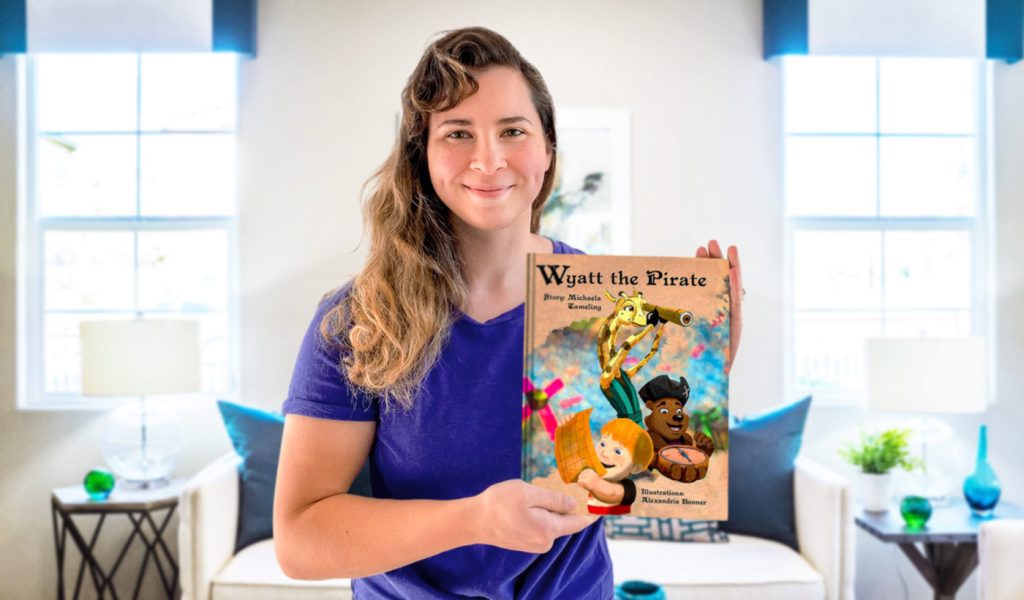
Illustrator Alexandria Bonner followed a simple but effective approach while working on Wyatt the Pirate with author Michaela Tameling: finishing two pages a week. “She was able to stay on top of her overall goal at her pace, and I was thrilled to receive updates from her!” writes Tameling.
Setting clear, achievable goals makes the work feel less overwhelming. And as Bonner says, “It may seem daunting, but make sure to pick a story that gives you the motivation needed to pull you toward the goal.”
Spend time concepting
Strong creative planning doesn’t stop at scheduling. It extends into how you develop your ideas. Before you dive into full production, take time to explore the look, tone, and structure of your book. Great creators share a few habits: They experiment early, stay persistent, and iterate continuously.
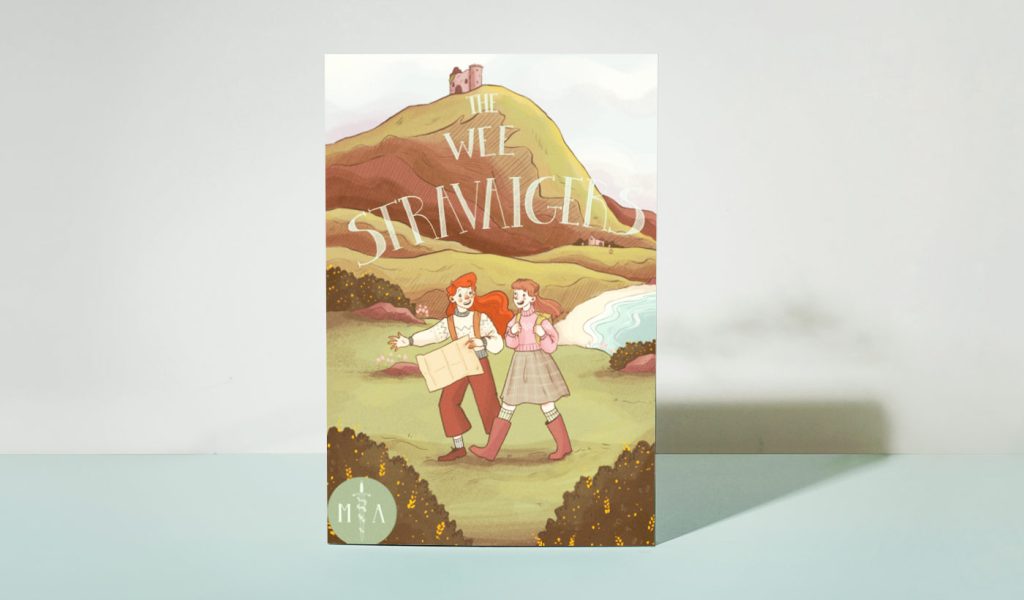
Scottish illustrator Morvern Anderson, creator of The Wee Stravaigers, puts it simply: “My creative process always begins with producing plenty of concept art, experimenting with colours, characters, and composition before I find something that I really like.”
Spending time on your book’s initial look and feel helps shape the rest of the process. But don’t get too attached to early ideas. Anderson moves from concept art to a comic script, then to thumbnails and layouts before final pages.
Even if you’re not an illustrator, this kind of exploration matters. Writers can experiment with tone and rhythm through short exercises, while photographers or designers can create mood boards to guide visual cohesion. The goal is to discover the version of your idea that feels most alive and commit to refining it until it’s ready for the next stage.
Make your book
Once you’ve defined your purpose and plan, it’s time to build. This is where ideas take shape through design, experimentation, and refinement. Whether you’re working solo, teaming up with collaborators, or exploring new tools, the making process is where creative intent becomes tangible.
Find collaborators
Self-publishing doesn’t have to mean doing everything alone. In fact, the best books often come from creative partnerships that combine different strengths.
Author Gregory M. Guity and illustrator Kent Clark met online through a shared love of comics. “Thanks to early social media…I connected with Kent Clark, an illustrator from Oklahoma who was as hungry to draw comics as I was to write one, and we made it happen,” Guity writes. Their collaboration led to Alleycat 2.0: Pilot, now a Blurb bestseller.
For creators Kim Mahan and Sue Clancy, collaboration wasn’t just about sharing the work—it was about blending their talents to create something new. Together, they co-created Kim Cooks Sue Draws, a cookbook-meets-comic that celebrates food and friendship in equal measure.
“A book doesn’t have to be complicated or perfect, just heartfelt,” they say. “The hardest part is finding a theme and tying it all together so it flows sequentially from cover to cover.”
These creators show that collaboration can sharpen ideas, sustain motivation, and elevate the final product. When you work with someone who complements your strengths, whether they’re a writer, illustrator, or designer, you’re not just dividing the workload. You’re expanding your creative reach, building something stronger than you could alone, and learning new ways to tell your story.
Experiment with new tools
If teaming up with another person isn’t in the cards, technology can still be your creative partner.
Artist and author Mark Terry took that literally in his graphic novel The Truth About Bees. All of the artwork was generated with AI, then refined with Photoshop. He even included an interview with the “artist” at the end of the book, written entirely by a robot.
“We can fear this change, this upset to the status quo, or we can use it to expand our artistic outputs,” Terry writes about the increase of AI in the self-publishing world. “People did not stop painting when photography was invented. People did not stop writing songs with the advent of the synthesizer and sequencer. It is now possible for anyone to produce a graphic novel, even with no artistic ability at all.”
Follow in Terry’s footsteps with his two favorite AI tools: DreamStudio, which can create paintings in any art style in seconds, and NovelAI, which can generate text but not necessarily great plots or consistent storylines. He used both as partners in his unique book project.
Seek feedback and keep refining
Every creator hits the point where they stop seeing their work clearly. That’s when feedback becomes essential.
Artist Donna Huntriss found her beta readers invaluable when creating The Birds in the Backyard. “At first, I wanted to do a book with only illustrations and no words,” she explains. “The feedback I got was, ‘We want more! We want to know about the birds you have featured.’” Her book became stronger thanks to the storytelling she incorporated.
Musician and illustrator Michael Johnson takes an even more iterative approach: “While you’re making [your book], seek advice, get criticism, reach out to experts who will help you, and keep remaking it until it is the best version of itself it can be. Be honest with yourself about whether what you made is worthwhile. If you feel what you made is worthwhile, then at that point, share it with the world.”
Johnson spent years refining his book Success! until it matched his vision perfectly. It’s a masterfully illustrated one-of-a-kind comic opera, including original compositions, that could only have become what it is today with constructive criticism.
Print a proof before you publish
Once you’ve created, formatted, critiqued, and readied your book, it’s time to print a single copy. A proof is a test copy of your book that allows you to check for any errors or changes you need to make before sharing the final version with the world.
Artist and author Stephanie Ryan ordered multiple draft copies of her book EMPATH before finalizing it. “I spent time with them, carrying them around and having them out in my space,” she says. “Start early and let yourself be with your book, make the adjustments, and actually hold it in your hands for a time.”
Great books aren’t just well-designed. They’re tested, refined, and built to last.

Market your book
Publishing isn’t the finish line—it’s the launch pad. Once your book is ready, think like a marketer, not just a maker. The same creativity you brought to design and storytelling now becomes your best tool for visibility and sales.
Build your audience early
Marketing begins long before your book goes live. A loyal community is the most valuable asset you can have, and building one takes time and authenticity.
Rachel A. Dawson is a content creator and bookworm who has built a social media community of hundreds of thousands of avid readers and journalers. Over the years, she shared her personal reading journals, and followers would ask how to get one. That curiosity became her first customer base for her successful RAD Reading Journal.
“I would suggest working toward building a genuine platform and presence online through your various channels and weaving in your marketing efforts as part of that, not as your whole strategy,” Dawson says. “If you can build relationships and trust with your community and followers over shared interests, they will be much more likely to invest in what you’re offering.”
Marc Karzen, photographer and creator of Late Night Bumpers, took a similar approach, finding and engaging the right fan communities before his book launched. The book celebrates his iconic on-air photography for Late Night with David Letterman, and Karzen knew those fans would be his strongest advocates.
“Months in advance of my release, I reached out to super-fan websites, Facebook groups, and YouTube channels,” he explains. “When you take time to build real relationships, they’ll often help you promote your project.”
Karzen’s timing helped, too: He released Late Night Bumpers just before the 40th anniversary of the show’s premiere and during the holiday season. The result? Fans got excited, commented, shared, and even posted selfies with the book—turning nostalgia into genuine buzz.
Like Dawson and Karzen, focus on connection before conversion. Build trust, share what matters to your community, and meet your audience where they already gather. People don’t just buy books. They buy into stories and values that resonate with them.

Design a focused book launch
Every strong book launch starts with intention. Treat your book like any other major release—plan your messaging, timing, and audience touchpoints in advance.
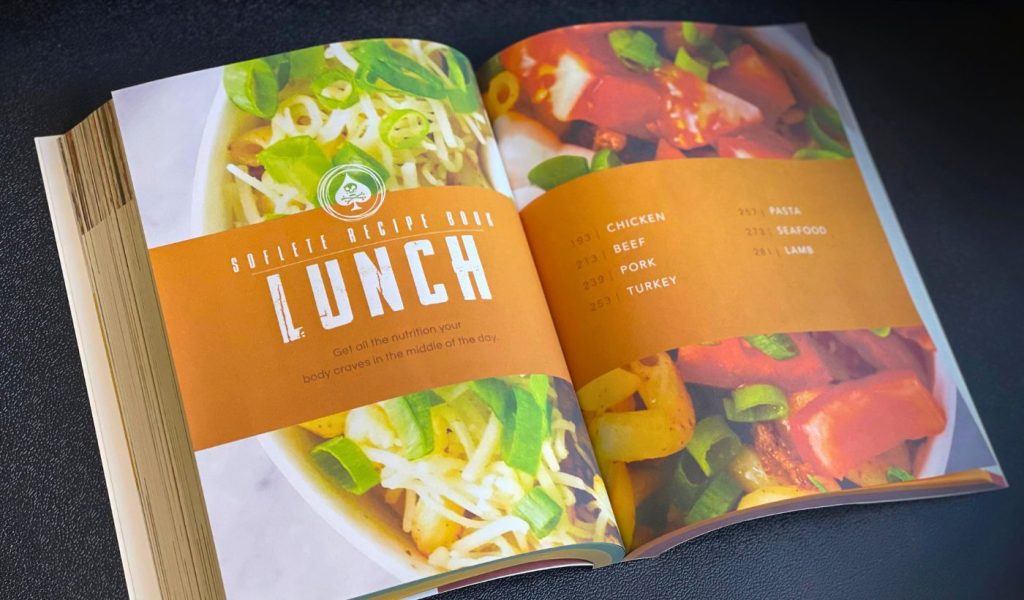
When SOFLETE, a performance lifestyle brand for tactical athletes, launched their Official SOFLETE Recipe Book, they approached it with the same precision they bring to training, content, and product design. “We executed a comprehensive launch campaign that featured the book and its benefits to all our customer segments,” they explain. “Between our email, social, and website communications, we drove a ton of interest, excitement, and conversion.”
Like Karzen, they timed the release to coincide with the holiday season, positioning the book as the perfect gift for both loyal customers and new audiences. After launch, they kept the momentum going, featuring the book in broader brand campaigns and pairing it with related products to spark renewed attention.
It’s a simple but powerful reminder: a well-planned launch doesn’t just drive sales, it builds brand equity. By aligning their message, audience, and timing, SOFLETE turned a single title into an ongoing engine for visibility and engagement. You can too!
Learn the basics of book marketing
Even a great book can disappear without visibility. Investing time in marketing fundamentals pays off.
“At first, I felt awkward promoting my book,” admits La Fonceur, research scientist, registered pharmacist, and bestselling author of right nutrient combinations COOKBOOK. “But then I thought like a reader: How would someone discover my book?”
She began learning everything she could about marketing, testing new tactics one by one. Her key self-publishing tips:
- Promote your books in advance so that readers can get excited.
- Consistently build your community (so you have someone to tell about upcoming books).
- Add your website, social media, and other important links to the end of your book to keep growing your community.
- Attend book fairs, participate in book events, visit libraries—get out in the world to find new readers.
- Run social media ads to increase visibility on price drops, new releases, or other updates.
- Publish more books. Your books sell your other books.
Her conclusion? “The more you learn, the more you earn.”
Use ads strategically
Paid ads can help great books find their readers—especially when paired with strong creative.
Eric Lilleør, publisher and editor of Wing Chun Illustrated and Gong Sau Wong: A Tribute, found that pairing Facebook ads, video clips, and Amazon Ads was his most effective strategy.
He started his paid marketing efforts by using Facebook Ads to boost a professionally produced book trailer, testimonial videos, and one-minute audio samples. Each ad drove to his book’s landing page, which he wrote using the copywriting framework AIDA (Attention, Interest, Desire, Action).
But Lilleør didn’t stop there. “Amazon Ads have helped sell more copies than any other marketing method by far!” he says. “I currently have more than 100 ads running, with more added weekly.”
He keeps costs efficient, with a maximum of $0.34 per click, while continually optimizing his keywords and landing pages. His method works because he treats his ads like storytelling: each one builds interest and guides readers toward action.
Grow your reach
A great launch is only the beginning. The most successful self-publishers keep their books in circulation, turning them into tools for visibility, credibility, and connection. Whether you’re using your book to market your business, grow your audience, or open new opportunities, the goal is the same: make it part of your ongoing ecosystem.
Show up where your readers are
Visibility doesn’t stop when your book is published. The most successful creators make their books part of their ongoing presence—sharing them wherever their audiences already engage with their work. Whether that’s at a gallery, a conference, a client meeting, or an industry event, having a tangible piece of your creativity on hand helps turn casual interest into meaningful connection.
Artist Pesya Altman discovered that firsthand. What began as a simple catalog for a gallery show became far more: a portfolio, a conversation starter, and a professional calling card. “I have the book available in meetings with new galleries and museums and at artist talk events,” she says. “It promotes my art and increases visibility in the art world.”
Likewise, Caroline Boudoux, professor, entrepreneur, and author of Fundamentals of Biomedical Optics, turned her niche subject into an event. After writing her book, she made a list of people she thought would be thrilled to review the finished product.
List in hand, she partnered with a major optics supplier to create a book launch party during a large industry conference and invited everyone on her list. Nearly 100 researchers—what she calls “the geek version of influencers”—attended the party. She followed it up with a website launch and social media posts, finishing by creating a community that shares teaching materials to go along with the book.
And Princeton-based flavor chemist John Wright, author of Flavor Creation (3rd Edition), found that public speaking became his best marketing tool. He regularly presents at universities and industry gatherings to reach new readers for his specialized guide. This tactic, combined with regular version updates, has led to his success—a strong reminder that showing up in person can open doors that algorithms can’t.
Integrate your book into your brand
A great book doesn’t just showcase your work, it can extend it. When your book reflects your broader mission or creative focus, it becomes a natural part of your brand story, not a one-off project.
Whole-Body Wellness educator Tylee Personett built The Whole-Body Wellness Blueprint Journal as both a teaching tool and a tangible expression of her coaching philosophy. “The Wellness Blueprint is the heart of my work,” she explains. “It’s both a self-discovery companion and a resource for sustainable, holistic change.” Her book has helped readers and clients find clarity and connection while also driving new workshop and course opportunities. By putting her framework into print, she deepened trust and gave her audience something lasting to return to.
Yerecic Label, a third-generation manufacturer serving the fresh food industry, takes a similar long view. Their Yerecic Label Portfolio series evolves with each edition, pairing new design techniques with market insights and data stories that spark meaningful dialogue with clients. Each edition is designed to start conversations about packaging trends, sustainability, and what’s next for the industry at meetings, trade shows, and events.
“The portfolio gives people something to hold, flip through, and talk about,” the Yerecic team says. “It’s how we turn a showcase of print into real connection.”
Whether you’re a solo creator or a seasoned brand, print can make your story tangible. A book turns your ideas into something physical. Something that embodies your values, strengthens relationships, and starts conversations that last.

Grow with the right support
Once your self-published book is out in the world, you don’t have to navigate growth alone. The right support can make the difference between staying visible and truly scaling your reach.
Transformational coach Jewel Guy, author of Dear Black Men, found success by treating her book as the cornerstone of a larger marketing system. “Creation is the easy part,” she says. “We all have something to share with the world. Allow yourself to do it. Then, hire a team of people who have the knowledge and skill to market your book on a consistent basis.”
With professional marketing support, she expanded her reach through in-person events, social media, podcast interviews, and national press—turning a single book into an ongoing platform for healing and conversation.
Her story is a reminder that self-publishing doesn’t mean going it alone. You can (and should) build the right team, tools, and partnerships around your work.
Keep publishing and evolving
Sometimes the best marketing strategy for your book is your next one. Each new release gives readers a reason to discover your past work, reviving attention, driving new sales, and keeping your creative work in circulation.
Laura A. Wideburg, author of Swedish: The Basics, has seen this firsthand. Now in its eighth edition, her book continues to reach new students through word of mouth and steady updates. “My students have given me a great deal of feedback, and I’ve published updated versions taking their comments seriously,” she says. By refining and republishing, Wideburg has kept her title relevant for more than a decade and grown a single textbook into a series.
Photographer John C. Burt takes a similar long-view approach. With more than 50 books under his belt, including the bestselling Beach at Sunrise, he’s found great success marketing them all through social media and a thriving photographic community.
Burt treats each project as both a standalone work and a signal boost for the rest. “If you are true to your craft and take great photographs, then you have the raw makings of a great book,” he says. “Do not be afraid to try something new and out there. Keep putting out your own creative works so that people can engage.”
These creators prove that consistent publishing keeps momentum alive. Every new project is another entry point into your world, helping new readers find you and longtime fans rediscover you.

Keep building what’s next
Every successful self-publisher begins with a clear purpose and continues to learn along the way. From defining your audience to designing, launching, and growing your reach, each book adds new credibility and opportunity.
Use these tips as a roadmap for your own self-publishing process—and as a reminder that you don’t have to wait for permission to share your story. With the right plan, the right tools, and a little persistence, your book can do more than you imagined.
***
Blurb empowers anyone to turn creativity into something real. With professional-quality tools, flexible printing options, and global distribution, you can design, print, and share your book on your own terms. Self-publish your book with Blurb today.